
Bed Bug Treatment
Bed bugs hide in seams, joints and cracks within a few feet of the bed. Treatment starts with confirming them, then preparing the rooms, and generally takes more than one visit.
Bites, Spots and Shed Skins
Most people first suspect bed bugs after waking up with itchy welts that were not there the night before, often in a line or a small cluster on the arms, neck or shoulders. Bites alone prove little. People react differently, some not at all, and other insects and skin conditions leave similar marks. What settles it is evidence in the bed and the furniture near it.
Adult bed bugs are flat, oval and reddish brown, about the size of an apple seed. Young ones are smaller and paler until they feed. They come out while people sleep and spend the rest of the time packed into tight places: mattress seams and piping, the underside of the box spring, the joints of the bed frame, the back of the headboard and the cracks of a nightstand.
Signs of Bed Bugs
- Rusty or dark spots on sheets, mattress seams and the box spring, soaked into the fabric like ink from a marker
- Tiny white eggs and empty eggshells, about the size of a pinhead, stuck in seams and crevices
- Pale, empty skins shed by young bed bugs as they grow
- Live bugs in the mattress piping, along the joints of the bed frame or behind the headboard
- Small smears of blood on a pillowcase or sheet from a bug crushed during the night
- Spots or bugs along baseboards, outlet covers, picture frames and curtain folds near the bed
- A sweet, musty smell in a room with a heavy infestation
Insects Mistaken for Bed Bugs
A specimen settles the question faster than any description. Press clear packing tape over a bug, stick the tape to a white card and keep it for the visit. These insects are the ones that get confused with bed bugs.
| Look-alike | How it differs from a bed bug | Where it usually turns up |
|---|---|---|
| Bat bugs | Nearly identical to the eye; longer hairs on the body, told apart under magnification | Rooms under an attic or beside a wall where bats roost; they bite people once the bats leave |
| Swallow bugs | The same flat shape, but grayer and hairier | Near swallow nests on eaves and gables, mostly in spring and summer |
| Carpet beetle larvae | Fuzzy, banded and carrot-shaped; they do not bite, though their hairs can irritate skin | Closets, baseboards, wool rugs and stored clothing |
| Fleas | Narrow from side to side instead of flat, and they jump; bites gather around the ankles | Homes with pets, in carpet and pet bedding |
| Spider beetles | Round, shiny and long-legged, like a tiny spider; they do not bite | Pantries, flour, dried food and pet food |
| Young cockroaches | Long antennae, fast runners and no bites | Kitchens and bathrooms, near water and food |
Fleas and cockroaches are part of general pest control. Bat bugs and swallow bugs keep coming back until the roost or the nest they feed from is gone.
Travel, Used Furniture and Shared Walls
Bed bugs do not fly or jump, so every infestation starts with bugs carried in or walking over from next door. Around East Lansing, couches and mattresses line the curbs when leases turn over, and some of them carry bed bugs to the next apartment. In a building with shared walls, the units on every side of an infested one, upstairs and downstairs included, are usually checked as well.
How did bed bugs get into my home?
Almost always on something carried in: a suitcase after a trip, a used couch or mattress, a backpack, a box from a storage unit or a guest’s bag. In apartment buildings they also walk in from the unit next door, along pipes, wiring and the gaps under baseboards. They do not come from dirt, and a clean home picks them up as easily as any other.
How should I check a hotel room and my suitcase?
Set the luggage on the rack or in the bathroom, never on the bed or the carpet. Pull back the sheets at the head of the bed and look along the mattress seams and behind the headboard for dark spots, shed skins or bugs. At home, unpack straight into the washer, run the clothes through a hot dryer and look over the suitcase seams before it goes back into the closet.
The Treatment Sequence
No single spray clears bed bugs. Treatment in the trade is a sequence, and a skipped step is the usual reason they come back.
-
Inspection
The bed, the furniture within a few feet of it, the baseboards and the rooms next door are checked, and the evidence is confirmed as bed bugs rather than a look-alike.
-
Preparation
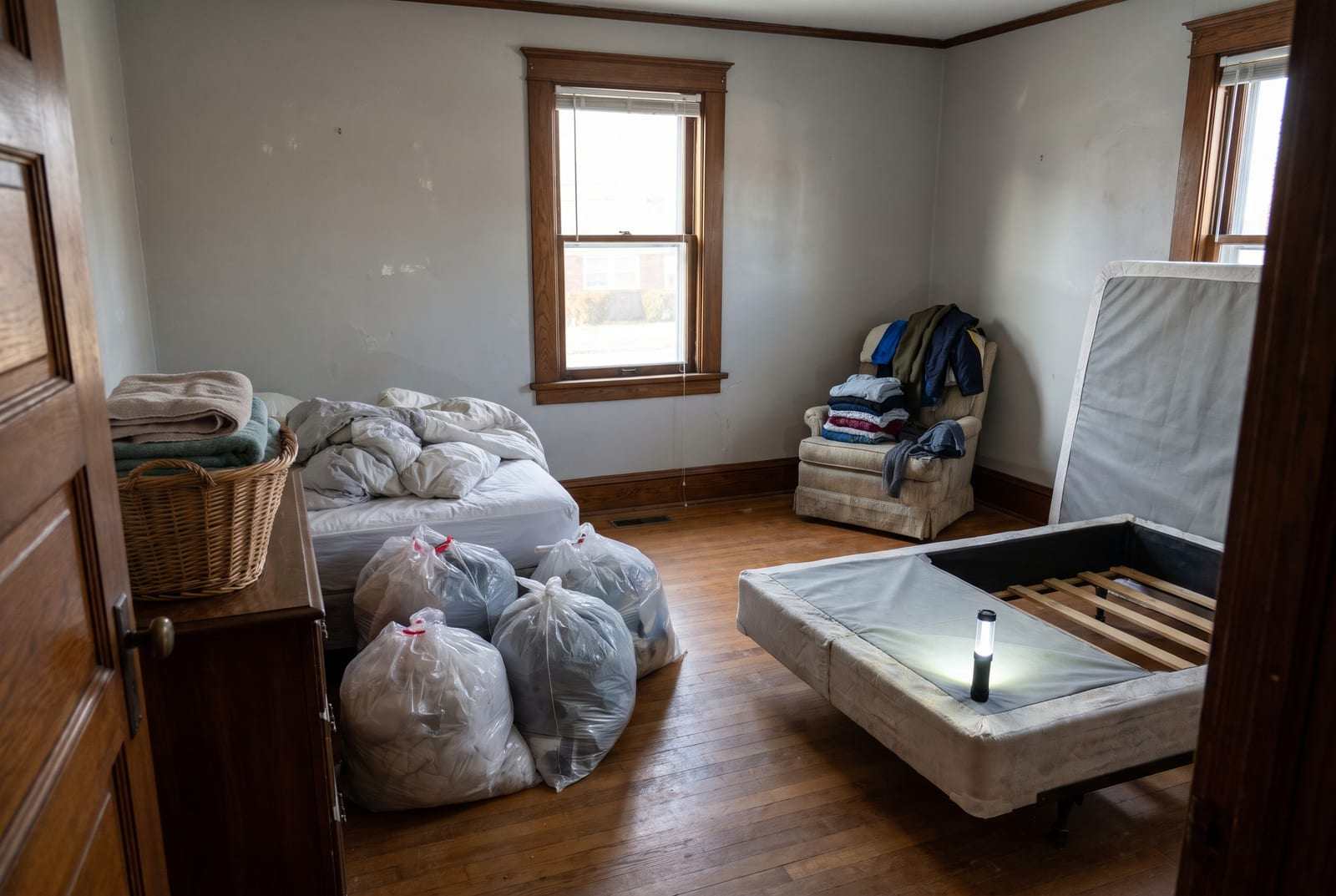
The household launders and bags bedding and clothing, clears the floors and empties the space under the bed, so every seam and crack can be reached.
-
Treatment
Rooms are either heated with portable heaters and fans until everything in them holds a temperature that kills bugs and eggs, generally over 120°F for several hours, or treated with products labeled for bed bugs in seams, cracks, frames and wall voids. Many jobs use both. Encasements then seal the mattress and box spring.
-
Follow-Up Visit
Eggs can survive a treatment, so a second visit about two weeks later is usual, to catch the young bugs that hatch.
-
Monitoring
Interceptor cups under the bed legs show whether any bugs are still moving, and checks go on until the cups and the seams stay clean.
Heat reaches bugs and eggs in one day but needs equipment, power and careful setup, and anything that melts or warps comes out of the room first. Products keep working in cracks and voids for weeks, but only on bugs that cross them, which is why the follow-up matters. Only products whose label lists mattresses and bedding go on them, one of the safety rules behind every treatment.
Getting the Bedroom Ready
Preparation decides how well a treatment works. The list for a visit depends on the method, so the one given for your home comes first; these are the steps most households are asked to take. The main rule is to keep everything in the room it came from. Carrying a mattress, a dresser or bags of clothes to another room spreads bed bugs to that room.
Which bed bug preparation steps are done?
Tick each step as it is done, then check what is left.
Mattresses, Sleep and the Days Before
Do I need to throw out the mattress?
Usually not. A mattress and box spring can be treated and then zipped into encasements made for bed bugs, which trap anything left inside and leave a smooth surface that is easy to check. A torn or badly stained mattress may be worth replacing, but only after the treatment, or the new one picks up bugs from the frame. One that does go out should be wrapped in plastic and marked so nobody carries it home.
Should I sleep in another room until it is over?
It is better not to. Bed bugs follow people, and moving to the couch or a guest room often spreads them to that room too. Sleeping in the same bed, pulled away from the wall with the bedding off the floor, keeps them in one place where the treatment and the monitors can reach them.
How long does preparation take?
For one bedroom, most households need a day or two, and the laundry takes the longest. A whole apartment, or a house with several affected rooms, can take a long weekend. Start with the bedding and the clothes from the rooms where the signs were found, and bag each load as it comes out of the dryer.
Call Before Moving Anything
Say which rooms are affected and what you have found, and leave the furniture where it is until the visit.