
Termite and Wood-Pest Control
Termites, carpenter ants and wood-boring beetles work out of sight, in sills, joists and framing. The company’s part is the termite inspection: finding the signs, naming the insect and tracing where it reaches the wood.
Subterranean Termites Under Michigan Houses
The termite found across southern Michigan, Lansing included, is the eastern subterranean termite. Its colonies live in the soil and need steady moisture, so the workers reach wood either where it touches the ground or through mud tubes, about the width of a pencil, built up a foundation wall. Inside the wood they eat along the grain and leave galleries lined with soil, often behind a surface that still looks sound.
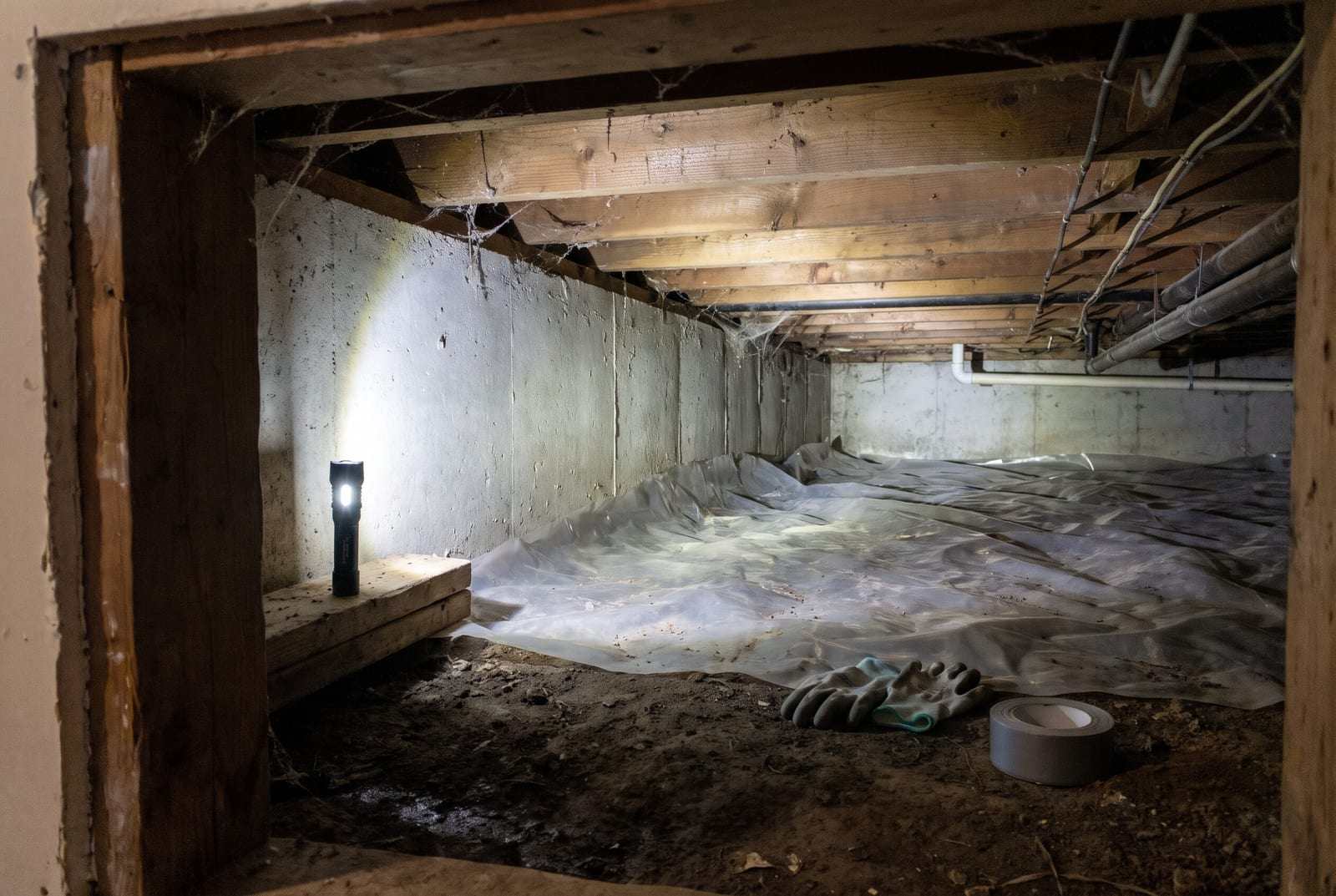
Damage usually starts where wood sits close to soil or stays damp: sill plates and rim joists on top of the foundation, floor joists over a crawlspace, door frames at a slab, porch posts and deck framing. Older houses with wood sills on block or fieldstone foundations, and basements that take on water every wet spring, give them what they need.
Because the workers stay inside the soil and the wood, a house can carry termites for years without anyone seeing one. An inspection looks for what they cannot hide, such as mud tubes, swarm wings and damaged wood, and for the damp spots, from a leaking gutter to soil piled against the siding, that draw them in.
Wood Pests and the Damage They Leave
Termites are not the only insects in the wood. The damage each one leaves, and where it leaves it, is usually enough to tell them apart.
| Pest | Signs of damage | Where it usually shows up |
|---|---|---|
| Eastern subterranean termites | Mud tubes; galleries along the grain packed with soil; hollow-sounding wood; shed wings in spring | Sill plates, rim joists, floor joists, door frames and wood touching soil |
| Carpenter ants | Smooth, clean galleries; coarse sawdust mixed with insect parts; large black ants indoors | Wet or decayed wood around leaking windows, roofs, decks and plumbing |
| Powderpost beetles | Round pinholes with powder as fine as flour sifting out | Hardwood floors, trim, furniture and stored hardwood lumber |
| Old house borers | Oval holes about a quarter inch wide; packed powdery frass; a ticking sound in the wood | Softwood rafters and framing in attics and crawlspaces |
| Anobiid beetles | Round holes a little larger than pinholes; gritty, pellet-like frass | Softwood and hardwood framing in damp crawlspaces and basements |
| Carpenter bees | Clean round holes about half an inch wide; sawdust and yellow stains under them | Fascia, eaves, deck rails and bare, unpainted wood |
Beetle damage is generally handled by replacing badly damaged wood, treating bare wood with a borate product and drying out damp crawlspaces; a whole structure with an active infestation is sometimes fumigated.
Swarmers, Ants and Firewood Beetles
How do I tell termite swarmers from flying ants?
Termite swarmers have a thick waist with no pinch, straight antennae and two pairs of wings of the same length, longer than the body, which break off easily. Flying ants have a narrow, pinched waist, bent antennae and front wings longer than the back ones. Termites usually swarm on warm spring days after rain. A swarm inside the house means a colony in or under the building, so keep a few on clear tape for the inspection.
What is the difference between carpenter ants and termites?
Termites eat wood and leave galleries packed with soil, and they are pale and rarely seen outside a swarm. Carpenter ants do not eat wood. They hollow it out to nest, leaving smooth, clean tunnels and pushing out coarse sawdust mixed with insect parts. Large black ants walking indoors at night often point to a nest in damp wood nearby; they are handled as general pest control, along with the leak or the rot that drew them.
Can firewood bring wood-boring beetles into the house?
Yes. Beetles in firewood often come out indoors when a log warms up by the stove, which can look alarming. Most of them need bark or fresh, damp wood and cannot attack the dry, finished lumber of a house. Stack firewood outside, off the ground and away from the walls, bring in only what will burn within a few days, and get it close to home instead of hauling it long distances.
Inspection, Then Treatment
The inspection is the company’s part of termite work. The steps after it are how the trade generally handles a confirmed infestation.
-
Inspection
The foundation, the crawlspace or basement, the sills, the joists, the garage and any attached porch or deck are checked, the wood is sounded and probed, and moisture problems are noted.
-
Identification
The insect is named from a specimen, shed wings or the damage itself, since termites, carpenter ants and beetles are each handled differently.
-
Treatment
For subterranean termites, treatment generally involves either a liquid termiticide applied to the soil along the foundation, in a trench and through holes drilled in slabs and porches, or bait stations set in the soil around the house, whose bait the workers carry back to the colony. Liquid treatments act sooner; baits take longer but put less product into the ground.
-
Repair and Moisture
Damaged structural wood is repaired by a carpenter, and the conditions that drew termites in, such as leaks, poor grading and wood touching soil, are corrected.
-
Monitoring
Bait stations are checked on a schedule, and a yearly look at the foundation and the crawlspace is common, since a treated house can still draw a new colony later.
A well, a cistern or a drain close to the house limits where a liquid treatment can go, because the product’s label says so, and the label is one of the safety and code rules every treatment follows.
Damage, Inspections and Home Sales
How much damage do termites do, and how fast?
Less quickly than most people fear, and more than they expect over time. A colony feeds slowly but without a break, so serious structural damage generally takes years of unnoticed feeding. That is why most of the harm turns up in sills and joists nobody looks at, and why a yearly check is common practice for a house that has had termites. There is time to get an inspection and weigh the options, but not to leave a confirmed infestation alone.
Do I need a termite inspection to sell my house?
Many buyers and lenders ask for a wood-destroying insect inspection during a sale, and some loan programs require one. The lender or the agent says which report they need and who may sign it, so ask them first, before booking any inspection. An inspection before the house is listed leaves time to deal with whatever turns up.
Warning Signs Around the House
Most of these signs turn up long before a floor sags. Some point to termites, some to ants or beetles, and a few only to moisture that will attract them later.
Inside
- Swarms of winged insects near windows, doors or light fixtures in spring
- Piles of shed wings, all the same size, on sills and floors
- Wood that sounds hollow or lets a screwdriver sink in
- Paint that bubbles or blisters over wood, and trim that crushes under a thumb
- Mud tubes on basement walls, piers or the underside of the floor
- Small heaps of sawdust or fine powder under trim, beams or furniture
Outside
- Mud tubes running up the foundation, piers or porch steps
- Siding, trim or posts in contact with the soil
- Firewood or lumber stacked against the house
- Mulch heaped high enough to touch the siding
- Gutters and downspouts that empty against the foundation
- Round holes in fascia boards and deck rails
Book a Termite Inspection
Say what you have found and where in the house, whether mud tubes, shed wings, soft wood or a swarm by a window.